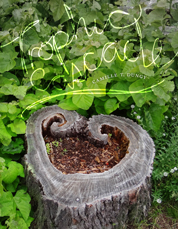
Trophic Cascade

Edited by Camille T. Dungy
University of Georgia Press, December 2009

Black Nature is the first anthology to focus on nature writing by African American poets. Camille T. Dungy has selected 180 poems from 93 poets that provide unique perspectives on American social and literary history to broaden our concept of nature poetry and African American poetics. This collection features major writers, such as Phillis Wheatley, Rita Dove, Yusef Komunyakaa, Gwendolyn Brooks, Sterling Brown, Robert Hayden, Wanda Coleman, Natasha Trethewey, Nikki Giovanni, and Melvin B. Tolson, as well as newer talents, such as Douglas Kearney, Amber Flora Thomas, Major Jackson, and Janice Harrington.

Included are poets writing out of slavery, Reconstruction, the Harlem Renaissance, the Black Arts Movement, and late twentieth- and early twenty-first-century African American poetic movements. Black Nature brings to the fore a neglected and vital means of considering poetry by African Americans and nature-related poetry as a whole.

Awards
Winner of the 2010 Northern California Book Award Special Recognition Award
2010 NAACP Image Award Nominee

Praise for the anthology
Just as nature is too often defined as wilderness when, in fact, nature is everywhere we are, our nature poetry is too often defined by Anglo-American perspectives, even though poets of all backgrounds write about the living world. By creating an anthology of nature poetry by African American writers, poet and editor Dungy enlarges our understanding of the nexus between nature and culture, and introduces a “new way of thinking about nature writing and writing by black Americans.” African American poets describe the need for practical knowledge of the wild to survive, the toil of working the land, and moments of spiritual communion with nature’s countless manifestations. Dungy provides an arresting introductory overview of 180 poems by 93 poets, and incisive essays accompany each thematic grouping. This analysis is dynamic and crucial, but the poems, beginning with Lucille Clifton’s “the earth is a living thing,” are ravishing. Dungy’s unique, enlightening, and heart-opening anthology embraces George Moses Horton, who lived as a slave, and today’s award-winning Cyrus Cassells, haiku by Richard Wright, and poems funny, smart, sexy, devastating, and exquisite by Nikki Giovanni, Janice N. Harrington, Yusef Komunyakaa, Carl Phillips, and their many resounding peers, each expressing provocative perceptions of the great tide of existence.
—Donna Seaman, Booklist Starred Review

Dungy has compiled what might have taken a lifetime to assemble, yet here it is at this moment when our culture is assessing both its relationship to the natural world and its relationship with its black citizens. The timing could not be better for such a comprehensive look at what black poets have contributed to our understanding of nature. What excites about this anthology is that it is not only the richest and most comprehensive collection of poems by black poets I have read, it is the richest and most comprehensive collection of poems about nature that I have read. I believe the book should be widely read, taught, and talked about.
—Alison Hawthorne Deming, author of Rope

With extraordinary insight and substantial creative vision the rich synthesis of this anthology offers a strikingly original contour to the seasons of Black poets and poetry. The critical wisdom accumulated here is as important as the beautifully structured cycles that Dungy uses as landscaped categories to contain these important poems. The methodology here is as graceful as it is rigorously intelligent. Dungy’s anthology is a major contribution to twenty-first century Black Studies.
—Karla FC Holloway, author of BookMarks: Reading in Black and White–A Memoir

Available in print and e-book

Wesleyan University Press, March 2017

In this fourth book in a series of award-winning survival narratives, Dungy writes positioned at a fulcrum, bringing a new life into the world even as her elders are passing on. In a time of massive environmental degradation, violence and abuse of power, a world in which we all must survive, these poems resonate within and beyond the scope of the human realms, delicately balancing between conflicting loci of attention. Dwelling between vibrancy and its opposite, Dungy writes in a single poem about a mother, a daughter, Smokin’ Joe Frazier, brittle stars, giant boulders, and a dead blue whale. These poems are written in the face of despair to hold an impossible love and a commitment to hope.
[nbsp]

Praise for Trophic Cascade

Earthly and visionary, a soulful reckoning for our twenty-first century, held in focus through echoes of the past and future, but always firmly rooted in now. Each poem is a bridge in the music of a language that we believe and trust, that heals.
-Yusef Komunyakaa, author of Pleasure Dome

This is the work of a feminist whose voice is confident, authoritative―it is a book that does not wonder about or meditate on so much as sing, declare, witness, order, elegize. Dungy’s poems manifest an uneasy self-perception, but―or I should say, and―their source is strength and love. The combination makes Trophic Cascade urgent and necessary.
-Joy Katz, author of All You Do Is Perceive

Nature, motherhood, and racial violence intersect in Trophic Cascade, Camille T. Dungy‘s fourth poetry collection. Dungy… demonstrates her mastery of synthesis: fact, observation, and revelation mingle in perfect proportions. Trophic Cascade frequently bears witness—to violence, to loss, to environmental degradation—but for Dungy, witnessing entails hope.
Harvard Review

Available in print and e-book